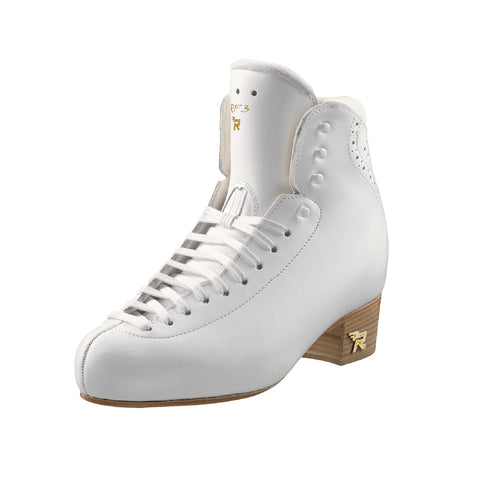
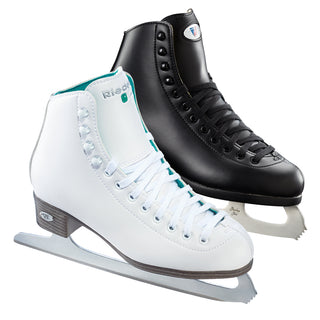
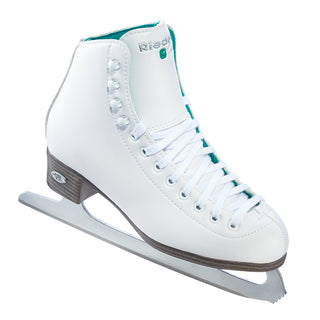
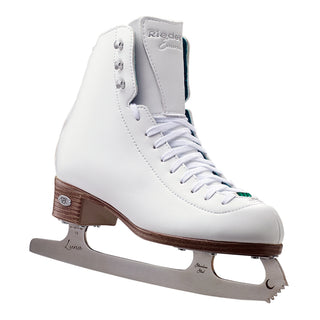
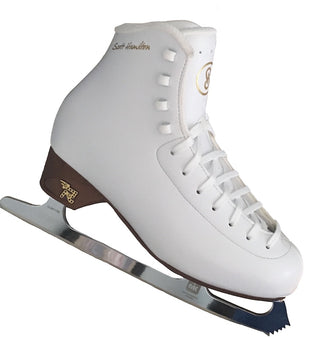
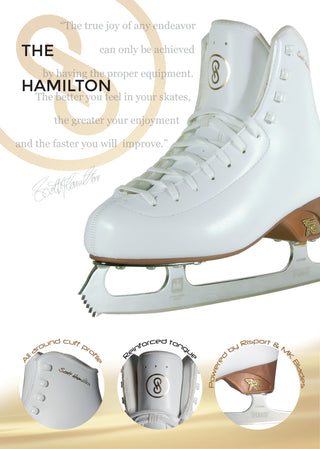
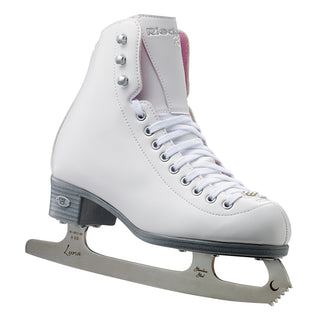
Breaking in new skates is often uncomfortable. Leather is stiff and needs to soften to your specific foot shape. BUT there is a difference between "uncomfortable" and pain. Warning symptoms to watch for may include blisters on the heel, instep or baby toe. Other complaints to listen for are tired feet, pain down the center of the foot, back pain or "I can't get over my inside/outside edge". Proper fit is essential to performance and longevity in the sport. Improper fit affects not only the feet but it can also affect the back as well. Do not hesitate to call with question on new skate fit. The skate sale is not final until you and I are both satisfied with the fit.
Many brands have heat molding technology. The gel reinforcement help the boots fit better. Follow instructions given when you purchase the skates.
For the first few sessions, leave the bottom hook unlaced. This gives the foot a chance to settle properly in the boot. This also prevents stretching the boots from the back, which causes the heels to lift out of stiff boots, and also puts heavy, ugly wrinkles in the area below the ankle bones on the outside. Do not lace your skates too tight. This is a very bad habit for many reasons. You should be able to easily get a finger into the top of your skate when it is laced.
In the first few days completely unlace and relace your boot about 3 times. This will make sure the tongue is in the proper position and the lace pattern is correct. During the break-in period it will be necessary for you to occasionally stop and retie your boots. This is due to the stretching of the new laces, and the boots conforming to the shape of your foot and ankle.
It is much easier to prevent a blister than it is to treat one after it is formed. Generally, the area where a new skate will rub is around the top. Cosmetic sponges (found at the drug store) or gel sleeves (known often by brand name Bunga but other brands are available) are the best prevention.
During the first few sessions go easy on your boots and your ankles. Limit jumps and spins. Do not over do it. This can put tremendous pressure on the muscles and tendons of your foot and ankle. Do not use your old skates as a "crutch". Of course your old skates will feel better than the new ones but it will just prolong the break in of the new skates.
Each blade is shaped to do something different so there might be a transition period if you are moving up to a new blade.
Your blade has been mounted using 4 screws. Each screw is on a "slider". This allows for easy adjustment. In most cases this will not be necessary as your blade was mounted using the center line of the boot. (Looking at the bottom of the skate lining it up with the toe seam and the center of the last will not necessarily give you the center line.) Within 2-3 sessions you will know if your blade needs adjustment. After this period your permanent screws need to be mounted! I can't stress this enough. If your permanents do not get mounted, your blade can move and, in the worst case scenario, you can break your screws off. If your screw breaks that hole is essentially unusable. Contact your retailer to place permanent screws.